Bev Williams
07889 780919
bev@drivecoach.org
Bev Williams
07889 780919
bev@drivecoach.org
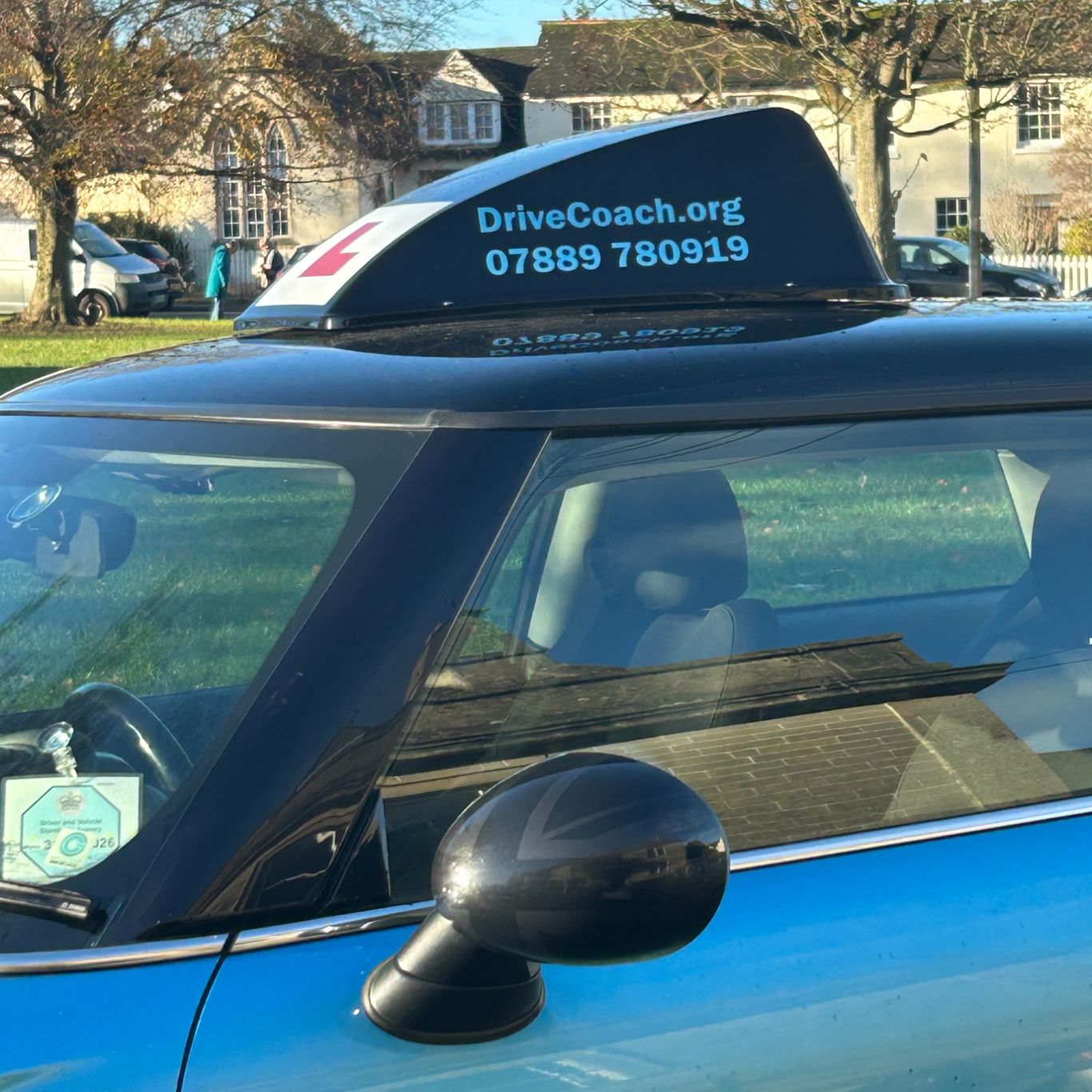
How many driving lessons does the average learner need? A commonly quoted UK benchmark is around 45 hours of professional tuition alongside approximately 22 hours of private practice. However, this is only a broad guide. Some learners need fewer hours, while others benefit from considerably more time behind the wheel.
There is no compulsory number of lessons you must complete before taking your practical test. Your progress depends on your previous experience, confidence, lesson frequency, private practice and ability to drive safely without prompts. Current DVSA guidance focuses on reaching the required standard rather than completing a fixed number of hours.
Two learners can start at the same time and progress at completely different rates. This is normal and does not mean that one person is a better future driver than the other.
Several factors influence how long it takes to learn to drive.
Previous Driving Experience
A complete beginner may need time to become comfortable with basic controls before moving on to more complex situations.
Someone who has already completed lessons elsewhere may need fewer hours, although an instructor will still need to assess their current skills, habits and confidence.
Previous experience does not always shorten the process. Learners sometimes need time to correct unsafe habits or rebuild skills after a long break.
Lesson Frequency
Regular lessons usually make it easier to retain knowledge and build momentum. Long gaps can mean spending part of each session revisiting skills that previously felt comfortable.
One lesson every week may provide steady progress for many learners. The right schedule still depends on availability, budget and how much private practice is possible between lessons.
At Drive Coach, 90-minute sessions are often preferred because they give learners more time to settle into the lesson, travel to suitable practice areas and work on a skill in greater depth.
Confidence & Anxiety
Confidence can have a significant affect on progress. A learner may understand a skill but need more time before they can perform it calmly and independently in different situations.
A patient approach is particularly important for beginners and anxious learners. Rushing through topics may create short-term progress but leave gaps that become more noticeable later.
Our beginner driver lessons are adapted to the learner’s pace, with time to ask questions, repeat skills and build confidence gradually.
Private Driving Practice
Private practice can help learners reinforce techniques covered during professional lessons and experience a wider variety of situations.
It is most useful when it supports the instructor’s teaching rather than introducing conflicting methods. The DVSA advises learners to begin private practice when their instructor believes they are ready and to continue working closely with them throughout the learning process.
Anyone supervising private practice must meet the legal requirements, and the vehicle must be roadworthy, properly insured and display the correct learner plates. The official GOV.UK guidance on practising with family or friends explains the applicable rules.
Individual Learning Style
Some learners grasp new skills after a short explanation. Others learn best through demonstration, repetition, discussion or reflecting after a lesson.
Good tuition adapts to the individual rather than expecting every learner to progress through an identical timetable.
This is one reason why the number of lessons taken by a friend or family member is not a reliable guide to your own learning journey.
Road & Traffic Experience
Learning vehicle control is only one part of becoming a safe driver.
You also need experience of:
A learner may control the vehicle well but still need more experience reading the road, anticipating hazards and making safe decisions without guidance.
The number of lesson hours does not translate into the same calendar period for everyone.
For example, a learner completing one 90-minute lesson each week would receive approximately six hours of professional tuition every four weeks. At that frequency, 45 hours would take around seven to eight months, excluding holidays, cancellations and additional practice.
Someone taking more frequent lessons may accumulate the same hours sooner. However, simply compressing lessons into a shorter period does not guarantee faster or better progress.
Learners need enough time to absorb feedback, practise safely and develop consistent judgement. The goal is not to complete lessons as quickly as possible. It is to become capable of driving safely without an instructor beside you.
Private practice may help learners consolidate their skills and make more efficient use of professional lesson time, but it cannot fully replace tuition from a qualified instructor.
Professional lessons provide:
Private practice provides additional time behind the wheel, but the supervising driver may not have the training to identify every problem or explain how to correct it.
The most effective approach is usually for professional lessons and private practice to complement each other. The DVSA notes that building more varied driving experience before the test can help learners become better prepared for independent driving afterwards.
Needing more lessons is not a failure, but there are practical ways to make your learning more productive.
Before each session, think about what you covered previously and note anything you found difficult. During the lesson, ask questions when an instruction or situation is unclear.
Afterwards, record:
Where suitable private practice is available, work on skills your instructor has agreed are appropriate. Avoid attempting unfamiliar or advanced situations without guidance.
You can also use trusted resources between lessons to strengthen your understanding of road signs, rules and decision-making. Our learning resources provide further support alongside practical tuition.
Every learner must demonstrate the same national driving standard, regardless of where the test takes place.
However, preparing in a range of relevant road environments helps you become more comfortable handling the situations that could arise during the test.
Drive Coach prepares learners for the Chippenham driving test centre. Lessons in and around Calne can include varied local roads before progressing towards the types of busier routes and traffic conditions learners may encounter around Chippenham.
The aim is not to memorise individual test routes. It is to develop the judgement and flexibility needed to drive safely wherever the examiner directs you.
Is 20 Driving Lessons Enough to Pass?
It may be enough for some learners, particularly those with substantial suitable private practice or previous experience. For most complete beginners, 20 hours will not provide enough time to build consistent, independent skills across varied conditions.
Is One Driving Lesson A Week Enough?
One lesson a week can support steady progress, especially when sessions are regular and reinforced with private practice. Some learners benefit from more frequent tuition, while others need a schedule that suits their budget and availability.
Are Longer Driving Lessons Better?
Longer lessons can provide more time to reach suitable practice areas, repeat skills and receive feedback. They are not automatically better for everyone, but 90-minute sessions often offer a useful balance between depth and concentration.
Should I Book My Test Before I Am Ready?
It is generally better to book when your instructor believes you are approaching the required standard. The DVSA advises learners to book only when they are ready to pass and capable of driving safely on their own, however the current length of waiting lists may make this impractical. Discuss this with Bev and she will be able to guide you based on your progress and the current test situation.
Do I Need Private Practice to Pass?
Private practice is not compulsory. Learners can prepare entirely through professional tuition, although this may mean needing more paid lesson hours. Suitable private practice can provide valuable additional experience when it is safe, legal and coordinated with your instructor.
How Much Will My Driving Lessons Cost Overall?
Your total cost depends on the number and length of lessons you need. Because every learner progresses differently, multiplying an average lesson figure by an hourly rate only provides a rough estimate. You can review Drive Coach’s current driving lesson prices and discuss a suitable lesson plan before getting started.
The average learner may need around 45 hours of professional instruction and further private practice, but your personal total could be higher or lower. What matters is whether you can drive safely, confidently and independently across different roads and conditions.
Try not to compare your progress with friends, siblings or other learners. Taking the time you genuinely need can help you approach your test with stronger skills and prepare you for driving alone after you pass.
For calm, personalised manual driving lessons in and around Calne, contact Drive Coach to discuss your experience, availability and learning goals.
We need your consent to load the translations
We use a third-party service to translate the website content that may collect data about your activity. Please review the details in the privacy policy and accept the service to view the translations.